You get an email from a qualified prospect who’s expressing interest in your product. The prospect knows what your company does, and why it’s vital to their success. They’ve got the budget, they’ve got the power to make a decision, and they’re ready to close by the end of the month. It’s the perfect sale.
But really, when does that ever happen? We all know that if sales were that easy, everyone would be doing it. In reality, this is a game of numbers, persistence, and smart prospecting. Enter: the Business Development Rep (BDR). As the first stop on the road to a closed sale, the BDR is a vital role on a sales team, laying the groundwork for faster closing times, more qualified prospects, and higher revenue.
And like the sales AE role, the BDR job isn’t easy! Day in and day out, BDRs work to establish relationships with prospects through cold calls, emails, social selling, and networking. Most importantly, the BDR prospects potential customers that slipped through the cracks and return these leads back to the account executive. As such, BDRs must be deliberate, intentional, and unrelenting.
Often, the feedback that BDRs provide will help shape the company’s sales strategy tremendously. With high prospect touchpoints and access to consistent feedback, the BDR team has the chance to become intimately familiar with pain points, pushback, and opportunity. With such intimate customer knowledge, the BDR could be your secret weapon and the key to unlocking your sales potential.
To better understand that BDR role, what it requires, and what salespeople could learn from the-team-behind-the-team, we went straight to the source: the Winmo BDR team.
What Can a Salesperson Learn From a BDR?
While the basics of outreach and follow-up probably aren’t rocket-science, the Winmo BDR team has identified 11 vital traits and qualities for success as a BDR — and beyond.
1. Know Every Touch
Salespeople know that numbers are crucial — calls, meetings, emails and more. Sales teams with routinized processes are likely already tracking things like emails, but there are so. many. more. customer touchpoints. BDRs are consistently tracking all of these touches, and you should be too.

2. Take Note of Positive vs. Negative Reply Rate
A BDR will determine how much interest is shown from their outreach by judging the positive versus negative response rate. With a focus on keeping the number of prospects high, BDRs bring a higher volume of clients in for the sales team to work with. If you or your team doesn’t have a BDR, make sure that your team is tracking replies — and not just relying on anecdotal evidence.
3. The Answer Is Only “No” Until It’s “Yes.”
A majority of the time, BDRs reach out to people that don’t necessarily want to be reached. Over a short phone call or email, it’s their job to explain the value of the product. BDRs do all of the things AEs can’t or don’t want to and continue to pursue people even when they have heard “no” 10 times. The ability to deal with frustration and remain patient when hearing “no” is an essential trait for every salesperson.
4. Curiosity Is a Key to Success
BDRs are ceaseless in their pursuit of success and salespeople need to be as well. Curiosity drives an urge for creativity and finding new customers. Once you find these, figuring out a way to keep them engaged and continue to act on behalf of your organization and grow.
5. Set Clear Expectations From the Outset
Clarity is needed within a sales team and with the customer as well. The BDR position can have high turnover rates. As a sales manager, it is so important to set expectations when hiring about what specific goals for each position so that success will be more attainable as a team.
Clarity with the customer should always be a priority. A BDR is often the first point of contact for a company. You never get a chance to make a good first impression. When selling a product, it’s important to be clear about what you are offering, why, and how it would benefit the customer. As a salesperson, everything you do, say and send reflects the company and its reputation, so make sure you are communicating clearly.

6. There Are No Wins Without a Clear Finish Line
Typically new to the team, BDRs are always looking for ways to improve. This should be something every salesperson does, regardless of how successful they may be. Once goals are set, it’s just as important to keep track of your progress and have regular check-ins with your team to ensure everyone is performing to the best of their ability, and if not attempt to figure out why. Goal setting is a way for teams to boost their motivation and constantly challenge themselves.

7. Attention to Detail
With constant cold calling, research, emails etc. throughout their day BDRs have to stay focused on the small things. Accuracy and focus through everyday tasks will make a sales team successful. While the details can get repetitive or looked over when things get busy, they are crucial to the big picture.

7 Things Every Salesperson Can Learn From a BDR
in Business Development, Salesby Anna CrochetYou get an email from a qualified prospect who’s expressing interest in your product. The prospect knows what your company does, and why it’s vital to their success. They’ve got the budget, they’ve got the power to make a decision, and they’re ready to close by the end of the month. It’s the perfect sale.
But really, when does that ever happen? We all know that if sales were that easy, everyone would be doing it. In reality, this is a game of numbers, persistence, and smart prospecting. Enter: the Business Development Rep (BDR). As the first stop on the road to a closed sale, the BDR is a vital role on a sales team, laying the groundwork for faster closing times, more qualified prospects, and higher revenue.
And like the sales AE role, the BDR job isn’t easy! Day in and day out, BDRs work to establish relationships with prospects through cold calls, emails, social selling, and networking. Most importantly, the BDR prospects potential customers that slipped through the cracks and return these leads back to the account executive. As such, BDRs must be deliberate, intentional, and unrelenting.
Often, the feedback that BDRs provide will help shape the company’s sales strategy tremendously. With high prospect touchpoints and access to consistent feedback, the BDR team has the chance to become intimately familiar with pain points, pushback, and opportunity. With such intimate customer knowledge, the BDR could be your secret weapon and the key to unlocking your sales potential.
To better understand that BDR role, what it requires, and what salespeople could learn from the-team-behind-the-team, we went straight to the source: the Winmo BDR team.
What Can a Salesperson Learn From a BDR?
While the basics of outreach and follow-up probably aren’t rocket-science, the Winmo BDR team has identified 11 vital traits and qualities for success as a BDR — and beyond.
1. Know Every Touch
Salespeople know that numbers are crucial — calls, meetings, emails and more. Sales teams with routinized processes are likely already tracking things like emails, but there are so. many. more. customer touchpoints. BDRs are consistently tracking all of these touches, and you should be too.
2. Take Note of Positive vs. Negative Reply Rate
A BDR will determine how much interest is shown from their outreach by judging the positive versus negative response rate. With a focus on keeping the number of prospects high, BDRs bring a higher volume of clients in for the sales team to work with. If you or your team doesn’t have a BDR, make sure that your team is tracking replies — and not just relying on anecdotal evidence.
3. The Answer Is Only “No” Until It’s “Yes.”
A majority of the time, BDRs reach out to people that don’t necessarily want to be reached. Over a short phone call or email, it’s their job to explain the value of the product. BDRs do all of the things AEs can’t or don’t want to and continue to pursue people even when they have heard “no” 10 times. The ability to deal with frustration and remain patient when hearing “no” is an essential trait for every salesperson.
4. Curiosity Is a Key to Success
BDRs are ceaseless in their pursuit of success and salespeople need to be as well. Curiosity drives an urge for creativity and finding new customers. Once you find these, figuring out a way to keep them engaged and continue to act on behalf of your organization and grow.
5. Set Clear Expectations From the Outset
Clarity is needed within a sales team and with the customer as well. The BDR position can have high turnover rates. As a sales manager, it is so important to set expectations when hiring about what specific goals for each position so that success will be more attainable as a team.
Clarity with the customer should always be a priority. A BDR is often the first point of contact for a company. You never get a chance to make a good first impression. When selling a product, it’s important to be clear about what you are offering, why, and how it would benefit the customer. As a salesperson, everything you do, say and send reflects the company and its reputation, so make sure you are communicating clearly.
6. There Are No Wins Without a Clear Finish Line
Typically new to the team, BDRs are always looking for ways to improve. This should be something every salesperson does, regardless of how successful they may be. Once goals are set, it’s just as important to keep track of your progress and have regular check-ins with your team to ensure everyone is performing to the best of their ability, and if not attempt to figure out why. Goal setting is a way for teams to boost their motivation and constantly challenge themselves.
7. Attention to Detail
With constant cold calling, research, emails etc. throughout their day BDRs have to stay focused on the small things. Accuracy and focus through everyday tasks will make a sales team successful. While the details can get repetitive or looked over when things get busy, they are crucial to the big picture.
Thanks In Advance: The Do’s and Don’ts of Sales Email Etiquette
in Agency New Business, Business Development, Salesby Anna CrochetWe all know a bad email when we see one. Whether someone has spelled your name wrong (despite the fact that it’s in your email address) or included egregious errors, small mistakes make a big difference in how the message of an email comes across. Sales email etiquette rules dictate what’s appropriate and what’s not, no matter your recipient. Knowing the in’s and out’s of professional email communication can make or break your message.
Most of the time, details set you apart. For example, did you know emails signed with “thank you in advance” have a 65.7% response rate? And yet, it’s one of the most hated phrases in email. If just four words can make that much of a difference, imagine what understanding a more broad range of email etiquette can do for your email prospecting? Stay far away from these eight errors to avoid miscommunication:
1) You don’t spellcheck
While this is obvious, it’s often overlooked. Misspellings send a message to the recipient that you don’t care about the task enough to make sure it’s written correctly. Particularly when applying for funding, it’s crucial that there are no typos to emphasize the importance of your ask.
2) You ignore response windows
It’s easy to let emails build up in your inbox, but there’s a sales email response etiquette depending on the person and situation. Immediate teammates/colleagues require a quicker response. External contacts, depending on importance, can typically wait until the end of the week.
3) You overlook punctuation
Punctuation is subtle when you use it correctly and obvious when you don’t. The type of punctuation is also key. Overuse of exclamation points and questions can overwhelm the recipient.
4) You use email as an avoidance tactic
Make sure you use email in the correct instances. Sometimes, a phone call makes more sense when canceling, planning, or speaking about a more complex issue rather than handling it behind a screen. Email is a wonderful tool for larger groups, but it shouldn’t be use to avoid other interactions.
5) There’s no balance
While finding a balance between casual and professional can be tough, it is an absolute must. The tone of an email will change based on who you are sending it to and the relationship that exists between you. Even when sending highly professional emails, make sure you are authentic and human to avoid sounding like a generic ask.
6) You overuse the high priority button
Evaluate the importance of your email, and refrain from using the high priority button unless absolutely necessary. Most of the time, using this feature can be avoided with a descriptive subject line.
7) You use emojis too freely
We all know emojis can be extremely tempting. There are so many options to choose from. However, we do not recommend emoji use unless the recipient has already used emojis. Most of the time, the setting is too formal for emojis or you don’t know the recipient well enough to judge their reaction properly.
8) You’re too sarcastic
Although sarcasm can be casual in conversation, it can be extremely hard to pick up on through a screen. It’s not worth the risk of miscommunication via sales email.
If you liked this blog post, check out:
5 Takeaways from ANA Masters of Marketing 2018
in Marketingby Jennifer GroeseUpdated: October 16, 2019
Interested in 3 Tips for Achieving Growth in 2020, Courtesy of ANA Masters of Marketing 2019? Read more here.
The ANA Masters of Marketing Conference is a unique event for the Winmo marketing team. Like other conferences, we get the opportunity to exhibit as Winmo and interact with our clients in an intimate setting, but for me (a marketer) it’s one of the most inspirational events I attend throughout the year. This 3-day event brings together all the marketing powerhouses into one room, where CMOs share powerful insights on topics like inclusivity and compliance while reminding us to remain focused on our customers and our brands’ influence on the global economy.
Leaving the ANA Masters conference this year, five themes/topics stood out the most to me:
1. Advertising’s Affects on Growth
No big surprise here as it was the theme of the event this year, but the word “growth” was definitely a buzzword around the conference. ANA CEO Bob Liodice and other CMO leaders talked about advertisers’ role in driving growth for the brands they represent, but also for the global economy.
The work we put out, the campaigns we’re running – they make a difference. They can bring people together, help solve world issues, and be an engine of growth for the global community. It was a powerful message about stepping back and appreciating that the content we’re putting into the world is seen, heard, and internalized while inviting industry professionals to ask, “what am I adding to the conversation?”
2. #MeToo, Meet #SeeHer: Inclusion & Equality Come to #ANAMasters
Once again, this topic won’t come as a big surprise given the temperature of our country at the moment, but the ANA Masters #SeeHer campaign and topics of gender and race inclusivity more broadly were throughout each of the CMO presentations at the conference.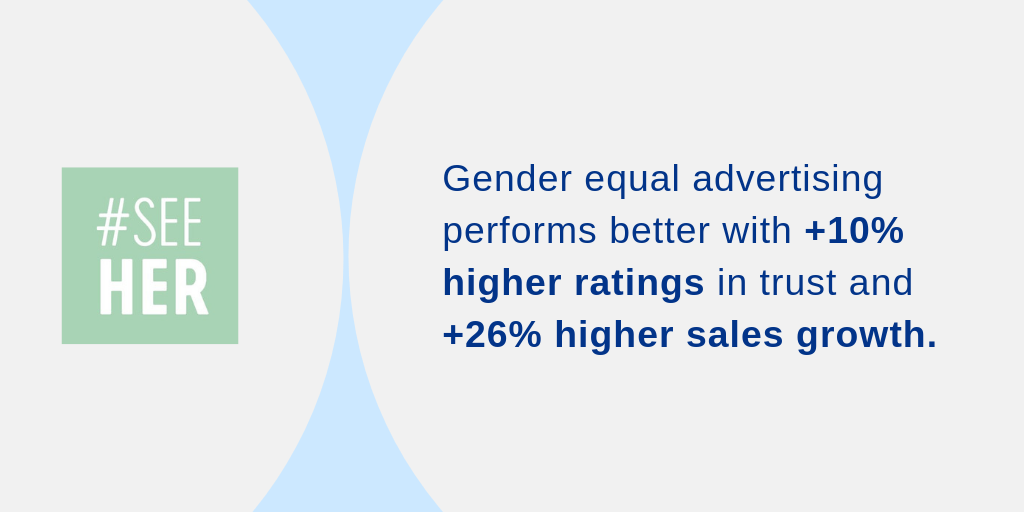
The CMO Growth Panel highlighted that “Gender equal advertising performs better with 10% higher ratings in trust and +26% higher in sales growth.” Advertisers who aren’t incorporating this into their overall strategy are missing out – not only on the revenue opportunity listed above but more importantly the opportunity and responsibility that brands have of bringing people together.
The Gender Equality Measurement (GEM) score was also highly discussed, a tool that scores ad or entertainment on how prominently they depict women. Introduced by the ANA in 2017, think of it as the ad industry’s version of Six-Sigma, a data-driven methodology that helps identify and eliminate gender bias. Resources like this allow advertisers to not only see their scores but also how they compare to their competitors and the broader industry.
3. Technology, Data, & Its Effects on the Industry
As marketers, we’ve never had more technology and data at our fingertips than we do now, and with that comes great responsibility. According to Mark Pritchard, CMO at P&G, “a responsibility to ‘wash’ and democratize the data so that other departments throughout the company can leverage it to reach overall brand promise goals.”
With technology and data being such a high focus, the CMO Growth Council announced the ANA’s Marketing University program kicking off this year. The program will include courses that aim to re-skill the industry, taking a preliminary focus on technology and data sector because it’s an area most advertisers are needing help in.
4. Advertising’s Move In-House
Another hot topic throughout ANA Masters (and one that seemed to make agency executives squirm!) was the trend towards bringing their advertising work in-house. One memorable takeaway: Eric Dickens, CMO at King’s Hawaiian, shared a story about how he went so far as to poach top agency talent and invest in them (or “bankroll,” as he phrased it) to build their own independent agencies. In return, King’s Hawaiian was able to get exclusive work and more personalized attention paid to their brand.
When looking at the stats, it’s not surprising to see this conversation bubbling to the top. According to a study done by the In-House Agency Forum (IHAF) and Forrester Research, “State of In-House Agencies,”64% of corporate America have in-house agencies today. That number was 42% just 10 years ago.
Seems like AORs might want to watch out!
5. TV Is Alive & Well (& Actually Branded Content)
Advertisers are always looking for new ways to engage with consumers via content and a handful of CMOs presenting this year talked about producing their own TV shows to do just that!
Ancestry launched “Who Do You Think You Are” on TLC in 2010, partnering with celebrities to help discover their ancestry all while filming their journey across the globe as they visit different cities that made a mark on their family history.
Deluxe, in an effort to bring their brand back, launched Small Business Revolution, a campaign (and ultimately a TV show) around highlighting the importance of small businesses and the impact they have on communities and our economy.
Lastly, King’s Hawaiian was looking for a way to increase their sales outside of their normal peak holiday season and focused on Halloween. In doing so, they created “The Legend of King’s Hallowaiian” to connect and engage more closely with their family audience.
As marketers, we all have a role to play – in our brand’s journey, our customer’s journey and even the direction of the economy. The ANA’s Masters of Marketing Conference reminded us of that and seemed to bring everyone in the room together – the marketers, the agencies and technologies they use. We’re all in this together.
48 Hours, 48 Websites, & The Road to 100,000 Lives
in Breaking Newsby Anna CrochetA few weeks ago, the Winmo team volunteered to participate in Atlanta’s annual 48in48 event, working to develop new websites for participating nonprofits. Starting on a Friday night, our team of developers and marketers met at the event headquarters to sketch out the site, discuss needs, and assign tasks. Together, the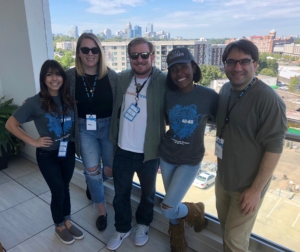 team completed a brand new WordPress-powered site, complete with new copy, images, email templates, and more, delivering a fresh new website to our assigned nonprofit by Sunday afternoon.
Getting to use our skills to help a nonprofit in need was incredibly rewarding! And while we can’t share which organization we worked with, we are proud to report that our client was thrilled with the new site.
But this isn’t about tooting our own horn! We’re taking this opportunity to share more about such a compelling organization, with whom we’ve partnered to further our mission to impact 100,000 lives by 2020.
What Is 48in48?
How powerful would it be to let highly skilled professionals use their skill set to help nonprofits grow? That’s the central question and mission of national volunteer organization 48in48.
48in48 is an event where developers, coders, designers, and marketing professionals in one city work together to build 48 websites for 48 nonprofits in 48 hours. At these 48-hour events, professional sites are created for each nonprofit.
And the good doesn’t stop there.
48in48 doesn’t just build websites for nonprofit leaders who lack the resources; the organization also offers six to 10 weeks of marketing and branding training before each event takes place. When the event wraps up, and the website is completed, 48in48 participants are left with a beautiful site and a fresh, actionable marketing strategy.
Winmo’s Mission: Impacting 100,000 Lives by 2020
In pursuit of our own mission to impact 100,000 lives by 2020, Winmo ensures that the 48in48 organization continues to grow by providing our deep understanding of the marketing and technology landscape. In addition to fielding our own volunteer team, we also offer our sales intelligence software to assist in recruiting agency professionals willing to donate their time and expertise to these hack-a-thon weekend events.
Partnering with such an impactful cause is a natural fit for Winmo; beyond our mission to impact 100,000 lives, we also work with agency and nonprofit professionals every single day. We love working with 48in48 because it engages our team, builds culture, and connects our work to the local community through sponsorship and volunteering.
“In our journey to impact 100,000 lives by 2020, the decision to partner with 48in48 was an easy one,” said Jennifer Groese, VP of Marketing at List Partners. “We’re proud to enable their partnership team with Winmo so they can effectively find new sponsors for their events throughout the US, and now across the pond as well. The best part? Seeing our very own employees dedicate their weekends by volunteering at both the Atlanta and New York events – we’re putting in the work as well!”
Using direct contacts found through Winmo, 48in48 continues to progress towards their goal of reaching 48 cities by 2025. They currently host events in Boston, Minneapolis, Atlanta, and New York. Leveraging Winmo’s platform, the 48in48 team has been able to effectively target the industry professionals needed to support their aggressive growth goals.
Assessing the Impact: NYC and Atlanta Events
Volunteers, sponsors, and partners came together in New York and Atlanta on October 12-14. Groups came together to share ideas and talents and made a significant impact in just one weekend.
According to 48in48, results include:
Join Winmo in Partnering with 48in48
We encourage you to get involved in your community and help those nonprofits that exist to do good. There are so many different opportunities within 48in48 such as:
Ultimately, it’s corporate support that makes 48in48 possible. It’s a unique opportunity to support a broad range of causes with a single investment; as an organization aimed at helping nonprofits generally, 48in48 has worked in everything from nonprofits arts organizations to youth recreation groups and beyond. Sponsorship opportunities include:
Here at Winmo, working with 48in48 has challenged us to look outside of ourselves and use our talents and resources for a greater good. We encourage you and your business to do the same and find a way to get involved and give back to your local community!
Winmo Launches HubSpot Integration For Contact Export
in Breaking Newsby Betsy HicksBig news! We’re excited to announce that Winmo users can now export verified, up-to-date marketing decision-makers and contacts from Winmo directly into HubSpot.
While we’ve always integrated with Salesforce, our users have been clamoring for a turnkey HubSpot connector that lets them export verified, up-to-date contact information from Winmo into their marketing automation platform.
This month, the long-awaited HubSpot connector launched, deploying a super easy-to-use tool that saves our clients the time of exporting a list from Winmo, then importing it into HubSpot. In fact, there’s a host of benefits that make this connector a game changer.
We’re excited about this integration for four high-level reasons:
What Clients Are Saying About the HubSpot Integration
While this integration has only been live for a few weeks, we’ve already gotten some super positive feedback from our Winmo clients. The topline takeaway? The HubSpot integration is already saving clients time.
Here’s just one way that it can do the same for you: If you’re a Winmo client who uses HubSpot as your primary CRM, add a text field to your imports to append the data with the sales rep to whom the lead should be assigned. This ensures that the lead routes to the right sales rep, reducing time spent grooming and maintain data and allowing viable leads to be worked sooner.
In addition, clients using HubSpot for marketing automation can set up targeted nurture campaigns designed to appeal to the needs of specific audiences built using Winmo. For example, if you’re targeting CMOs in the Beverage Industry as well as West Coast Media Agencies, you can export each specific prospect list built through Winmo to HubSpot. All you need to do is build a killer nurture email campaign for each segment (we recommend these subject lines to go with it), and voilà! Prospecting made easier.
Four Ways the HubSpot Integration Will Make Your Life Easier
Ultimately, we believe that this integration will save time and lift some of the burdens in the prospecting process. But how? We’re sharing four ways our new HubSpot integration will make your life easier:
HubSpot Caps Off a Year of Exciting Updates and Integrations
When we celebrated our third birthday at the beginning of October, we took a step back to consider all of the major changes and updated. In addition to October’s HubSpot launch, we’ve also updated time-savers like our updated recommendations page and in-app help desk. That’s to say nothing of the integrations beyond HubSpot that launched this year, like Hookit (sponsorship spending date), iSpot (TV advertising data), and Crystal Knows (scarily-accurate personality insights).
Take a look at the timeline of our last year for a big picture looks at all of the awesome ways we’ve improved our product.
Not a Winmo client, but interested in learning more about the HubSpot integration? Request a trial and see what the power of our predictive sales intelligence can do for you.
The Mirren Post-Pitch Client Debriefing Guide – Part 2
in Agency New Business, Business Development, Marketingby Brent HodginsThis post continues from The Mirren Post-Pitch Client Debriefing Guide – Part 1.
Whether you’ve won or lost the pitch, getting practical feedback from the client is critical. With this type of call, however, the goal of the client is to get off the phone as quickly as possible. Your goal, on the other hand, is to uncover the truth.
This Mirren guide provides a simple step-by-step approach to handle each feedback call. When handled methodically, you make it easier for the client to give you honest feedback, then helping you to effectively improve your new business approach.
Other Areas to Probe Related to the Pitch Process
In addition to the first seven areas we covered in the previous post, you should also review:
Refining Your Post-Pitch Client Debriefing Approach
Being authoritative and confident will ensure you get more out of the client. The opposite – sounding apologetic or meek – will confirm their choice not to select your agency and shorten the call. Part of the goal is to command the respect you deserve, but without being arrogant. Be specific in the questions you ask. Otherwise, you will most likely receive the “oh, so close but no cigar” answer.
For example, consider some of our recommended questions that include:
Lead the client through the process and do not let them off with vague answers. Rarely should you take the first answer at face value. Ask the client to expand on each answer. Get them to open up about why you were not selected.
Remember this is a break-up call, so the client may initially be reluctant to open up. The onus is on you to lead the call.
Taking Action After the Call
Once the call is complete, do not make any immediate and drastic changes to your process. You should not revise your approach based on one call, as the feedback is ultimately from only one person. Instead, look for common threads over time. If you hear the same feedback over several calls about specific areas of your process, then you should make the appropriate changes.
When the post-pitch client debriefing call is orchestrated more methodically, it can play an invaluable role in helping to fine-tune your new business process – converting more business for the agency.
Want to learn more about this, and other critical agency growth topics for agency chiefs, join us at The Mirren CEO Summit on November 6 – 7 in Chicago. In fact, our conference partner Winmo is providing a special discount for a limited time.
Four SnapChat Advertising Strategies to Try ASAP
in Marketing, Marketing Techby Mychele BrandonSnapChat advertising isn’t a new trend, but it certainly isn’t exactly a hard science, either. With a huge landscape of digital advertising opportunities, it’s fair to say that the SnapChat audience and platform offer more niche (but valuable!) opportunities for brands. Not all platforms are right for every advertiser; understanding the SnapChat ad market is critical when media planning and campaign pitching for clients.
So today, that’s just what we’re going do; keep reading for more on the value of Snap ads and platform opportunities for your clients.
Understanding SnapChat Advertising
SnapChat advertising was introduced in 2017, offering brands the ultimate resource to promote products and increase brand awareness while developing invaluable relationships with fans and followers. Since then, the platform has worked with brands to develop lenses, filters, Discover stories, and influencer campaigns, offering a diverse ad offering and opportunities ad portfolio.
Let’s break it down by the numbers:
All of these numbers add up to a very valuable advertising platform for brands that know how to mobilize an audience through new media and video channels.
Social Media Road Map: Where SnapChat Advertising Is Headed
With such a powerful platform available to brands and advertisers, it’s no surprise that SnapChat is continuing to innovate with marketing partners in mind.
Looking ahead, Snap appears to be integrating AR technology even further into marketing and sponsorship opportunities within the platform. In addition to offering paid, geofenced overlays, Snap now also offers region-specific, nationwide, and global sponsored lenses; the next frontier could be image-recognition triggered ads, making tailored ads even more personalized.
That personalization stands to go even further. While Snap ads continue to offer full-screen experiences with 100% viewability and default audio, platform advertising now offers add-ons like web view, app install, long-form video, and additional lens options. One of the newest updates competes directly with Facebook ad capability, allowing brands to target demographic groups in addition to the traditional location-based options.
The SnapChat advertising environment is evolving, but the platform is clearly working to develop unique offerings that meet modern advertising needs. That flexibility and innovation make the platform a strong consumer-focused advertising channel for national and global brands.
What Snap Ads Can Do For Business
Obviously, Snap advertising isn’t right for every business; as an agency expert, you’ll know your clients’ demographics and needs and will be able to build out a media mix that optimizes budget and reach.
For those looking for a little more context as to the power of Snap advertising, (and why it might be a strong area to sell against), we’ve included a solid example of the rich media ads Snap offers to ad partners.
A case study featured on Snap’s For Business site states the following:
In order to drive consideration at scale, HiSmile leveraged Snap Lifestyle Categories like Music, Sports Fans and Gamers, and used its own customer lists to develop lookalike audiences. This strategy allowed the company to scale its reach while focusing its spend on high-potential Snapchatters who shared characteristics with its existing purchasers. HiSmile complemented this reach tactic with a re-engagement campaign, using the Snap Pixel to develop audiences of past site visitors who exhibited a high intent to purchase.
HiSmile also kept its creative fresh, constantly testing different lengths, talent, and styles to learn what worked best with the Snapchat audience. They ultimately found the most success with an endemic, direct to camera style featuring a singular focus on the product and logo to drive qualified swipe ups.
HiSmile was able to scale its budgets with confidence after seeing ROI from their Snapchat campaigns. Ultimately, they were able to drive new qualified customers to their website which led to a 15% increase in revenue.
And that’s just one example.
Four SnapChat Advertising Strategies
The Mirren Post-Pitch Client Debriefing Guide: Part 1
in Agency New Business, Business Development, Marketingby Brent Hodgins[easy-tweet tweet=”Whether you’ve won or lost the pitch, getting practical feedback from the client is critical.” user=”@winmo” hashtags=”#winmo #mirren #postpitch #pitchstrategy”] Constructive insight about the agency, your team and your approach can help make or break future new business efforts. Your goal is to uncover the truth on how effectively your agency performed. This post-pitch client debriefing guide will allow you to do just that.
However, with this type of call, the goal of the client is to get off the phone as quickly as possible. If you lost the pitch, it’s a painful exercise – a break-up call. They want to get you off the phone so they can move on.
At best, you’ll typically get a superficial perspective and rarely anything critical. As with any break-up call, it’s difficult for the client to tell you the truth. In fact, the most common feedback is, “It was so close. You were a close second place. I wanted you to win, but it was someone else on the team. You guys were great.”
Many agency executives go their entire careers either winning or “coming in second.” Or so they’ve been told.
This Mirren guide provides a simple step-by-step approach to handle each feedback call. When handled methodically, you make it easier for the client to give you honest feedback, then helping you to effectively improve your new business approach. But then again, you were a very, very close second.
How to Uncover the Truth About How Well Your Agency Performed
You’ve done a tremendous amount of work for the pitch. Sometimes you’ve even completed months of work, all compressed down into two or three weeks. At the start of the pitch, the client promised they would provide feedback when everything concluded. And when you lose, you’re definitely looking for the client to make good on that promise.
Once you have the client on the phone, lead them through a brief post pitch analysis process. Having a well thought out approach (and set of questions) will help to uncover new insight about your team’s performance.
There are 7 key topics to focus on. The questions within each topic are meant to act as thought starters; you will need to customize the questions depending on the parameters of each respective pitch.
1. Team/Talent
2. Chemistry
3. Strategy
4. Creative Thinking
5. Solution
6. Effectiveness at Answering the Brief
7. Overall Presentation Impact/Persuasiveness
Stay tuned, as we continue this post with additional topics you must address with the client. We’ll then review what you should – and shouldn’t – implement, based on this critical client feedback.
Want to learn more about this, and other critical agency growth topics for agency chiefs, join us at The Mirren CEO Summit on November 6 – 7 in Chicago. In fact, our conference partner Winmo is providing a special $200 discount for a limited time with code Winmo@Mirren.
Send Better Email: Seven Proven Emails to Reach Your Next Prospect
in Agency New Business, Business Developmentby Betsy HicksIt’s time to send better email. A couple of weeks ago, we published seven free email templates to use when reaching out to prospects. The only caveat? Those templates were gated. Today, we’re unleashing the Kraken (so to speak) to help salespeople everywhere close every possible before the end of the month — and the end of Q3.
Sourced from Winmo’s own crack sales team, these emails are brief, actionable, and proven to generate responses from prospects. So pull your strongest email list and get to sending; Q3 goals are still within reach!
Offer Actionable Intelligence Insights:
Subject Line: Looking for help finding [target audience]?
Hey [Name],
Need help finding [target’s audience] that are [action] this quarter? How about finding [target’s expanded audience] that are [more valuable action]? Perhaps it would be helpful to know when [meaningful information]?
This is the type of intel that our [hyperlinked platform] helps thousands of [product targets] know about every day. Any interest in checking it out?
Not sure you want to talk to me yet? Watch our [hyperlinked demo] to gain more insight. Hope to connect with you soon.
[Signature]
Evaluate Your Prospect’s Current Strategy:
Subject Line: Quick question, [Name]
Hey [Name],
Quick question – does your current business strategy include [market-specific business development strategy]? I have a feeling our [platform] prospecting resource could be a huge help. Any interest in checking it out?
Hope to hear from you soon.
P.S. If you want to watch a quick 3-minute demo before getting back to me, here is a link to do so: [LINK]
Best,
[Signature]
The Best Invitation to Set Up a Call:
Subject Line: Call Tuesday or Thursday?
Hi [Name],
Reaching out because I’m interested to see if you are working on initiatives related to [business purpose], (i.e. [example]). We help companies [one liner] and would love to share use cases and best practices with you and the [company] team!
I’d like to set up 30 minutes to walk you through our platform and set you up with a trial to explore for yourself.
Does it make sense for an introductory call next Tuesday or Thursday?
Best,
[Signature]
Congratulate Your Prospect on Their Success:
Subject Line: Advertising question
Hi [Name],
I noticed [business] covers the most influential specialty markets across [industry]. Congrats on the success! I’m sure identifying [target] to work with is always top of mind!
That said, [paltform] helps companies [one liner pitch]. It supports [job titles i.e. salespeople] with [value-add] on [subject matter] for brands like [brand name] and [brand name].
Think we may be able to help. Would you be able to connect soon?
Talk soon,
[Signature]
Detail Why a Relationship With Your Prospect Makes Sense:
Subject Line: The tools your competitors are using
[Name],
I was researching [prospect’s company] work and success stories on your site and felt an introduction made sense since you’ve worked with [prospect’s clients].
I thought it would be useful for your team to know [product value-add], as well as [additional product value-add]. [Platform/product] is our new business solution designed for [product target] looking to [product use], and is currently used by [competitor companies].
Thought you might be interested in taking a look. Can we schedule time this week or next to connect?
Talk soon,
[Signature]
Lead With Your Proprietary Data:
Subject Line: Don’t miss this vital information
Hi [Name],
Using [plaform/product] this morning, I identified [relevant proprietary product data] in Q3.
You and I know that it’s critical to engage with new business prospects at the right time, but the challenge is to identify who/when/how to do that, right?
Enabling our clients to do that successfully has kept us in business for [years].
Are you open to discussing the brands or agencies that make sense to begin a conversation this month?
Talk soon,
[Signature]
Personalize Your Email — Like, Really Personalize It
Subject Line: Your Tweet
Hey [name],
I just saw your tweet from June on outreaching some competition. Congrats on the success at [competitor]!
I thought you should know that several other competitors in your space, like [competitors] are utilizing [product] to save time and get better insights into [product offering]. We have [differentiating quality] no one else has is what makes us unique. Historical info is nice in theory, but knowing what’s coming is what gets most of the big campaign dollars.
Do you have anyone going after new business or target accounts that might be worth taking a closer look?
Best,
[Signature]
Send Emails That Will Help You Reach Your Sales Goals
Whether or not you choose to use these sales templates, we recommend applying some of these overarching principles: lead with a strong subject line, appeal to your prospect’s personal needs, and don’t be afraid to consistently follow up. As one of our in-house new business development experts recently shared, the biggest mistake he consistently sees is the failure to follow up after sending an email. Reach the right people at the right time and request a Winmo trial today!
New Business Development Advice from an Industry Expert
in Agency New Business, Business Developmentby Betsy HicksLooking for new business development advice from a proven expert? You’ve come to the right place.
Meet Our New Business Development Industry Expert
Today, we’re talking to Matt Chollet, Executive Vice President of Agency Development at Catapult New Business, a company dedicated to connecting agencies, brand, design, and innovation, digital, and social marketing firms with the perfect new business opportunities.
Every day, Matt works alongside agencies to help implement repeatable new business processes that help generate qualified conversations with sought-after prospects. Agencies often approach Matt and his team when they’re tired of waiting for word of mouth or referrals and need to drive revenue now. Utilizing marketing automation, CRM, predictive data, and bespoke content, Matt and his team look to provide a truly proactive approach to new business development.
Get Familiar with Catapult New Business
A subsidiary of List Partners LLC., Winmo’s parent company, Catapult New Business identifies and delivers qualified new business opportunities to agencies on a consistent monthly basis. In essence, they do what some agencies can’t: prospect leads.
CNB works exclusively with marketing services firms of all kinds, but the one thing they all have in common is a desire to grow and do so with the freedom of choice.
Catapult and their team of expert advisors eat, breathe, and dream about agency new business, and clients can feel that energy. Recognized as one of the industry’s most effective agency business development firms, CNB is responsible for identifying and winning the right new business opportunities with national advertisers throughout North America.
Ultimately, Catapult is about driving results for their clients, and through our strategic new business implementations, has been able to uncover over $1 Billion+ in agency new business opportunities since 2005.
New Business Development Advice From an Industry Expert
First, can you share a little bit about your role with Catapult? What are you doing on a day-to-day?
I’m the EVP of Agency Development at Catapult, which means that I work with our agencies on strategies and processes for their outbound efforts. I also partner with our agencies to examine their current front-end new business development processes and find opportunities within that process to generate more conversations with their desired prospects.
What’s your business development strategy and process?
There is a lot that goes into any business development strategy, but I think it’s important to utilize multiple communication channels in every campaign while tailoring each outreach to the individual you are contacting. Too often, I see agencies send one, very general email to a big, unsegmented email list and then give up. To avoid that, and to keep communication feeling more human and authentic, we focus on varied outreach touchpoints, including phone, email, and social media. Additionally, we customize each communication channel with a more meaningful, personalized message.
What tools are most helpful as you begin prospecting?
We use Winmo for all of our contact info and context around the new business and relationship decisions made by brand marketers and potential prospects. Additionally, we use Salesloft to better automate our efforts and LinkedIn to gain insights into past personal information that might make a difference for networking opportunities.
What integrations within Winmo are most valuable to you?
Winmo’s Salesforce integration is invaluable for our team. The ability to export thousands of emails our prospect lists into Salesforce means that we can manage the lead lifecycle more effectively.
What’s the biggest or most common mistake you see in agency business development?
It’s not the biggest mistake, but since we are here with Winmo, I almost always see too small of prospect lists. This often comes from a fear of reaching out to people that are outside your network and then has the negative impact of greatly reducing the number of prospects that you are speaking to daily. When we begin an engagement, we often build an outline of what a perfect client might look like and then rebuild those clients in Winmo to find other prospects that would be a fit for our team. Instantly it opens up opportunities to our agencies that they were unaware of previously.
What are some personal or professional habits that you believe make a great new business pro?
Consistency and organization. New business development is not something you can just pick up and do occasionally; it has to be done regularly, every day, and ideally, should be your sole focus. I’ve always found that if I put unmovable appointments in my calendar for items like prospecting, networking, referral requests, and research, I’m more likely to get all of those key tasks done more consistently.
What cliche should new business development people ignore?
If there is any one thing to ignore, I’d say ignore the little voice in your head that says you’re being too pushy by asking for a conversation. Sure, maybe there are some people in the agency world out there that are too pushy, but in my experience, agency new business people don’t push enough. If you have something of value that can really improve a brand or a CMO’s life, share that value. Don’t be afraid of being pushy if what you are doing is truly valuable.
And finally, what new business development advice would you give to your agency counterparts?
Take the time to build a repeatable process for your new business efforts and stick to it. That way, timing is never an issue and you’ll consistently build trust through valuable touchpoints all year long.