Influencer campaigns have officially entered their blockbuster era. This summer, brands are tapping high-profile creators and culturally relevant talent to anchor product launches, fuel cross-platform content, and meet Gen-Z where they scroll. From celebrity fragrance lines to fast food dupe hacks, the summer 2025 influencer marketing strategy is crystal clear: build community first, sell second.
The convergence of media fragmentation, creator loyalty, and rising pressure to demonstrate cultural relevance has pushed influencer marketing to the top of the CMO priority list. Audiences, especially younger demographics, are increasingly resistant to traditional ads and more responsive to trusted voices within their communities. Platforms like TikTok, YouTube, and Instagram continue to reward creator-driven content in their algorithms, while retail media networks and social commerce integrations make ROI easier to track.
For agencies and media partners, the implications are massive. Creative AORs are being asked to develop campaign narratives that begin with a creator, not end with one. Media shops are under pressure to fold influencer spend into omnichannel buys, while measurement partners must evolve attribution models that account for social ripple effects creating a reshaped marketing landscape that prioritizes influence as a core distribution and conversion channel.
Download Winmo’s Brand + Influencer Intelligence Preview to uncover the full roster of brands embracing creator-led strategies and learn how your agency or media team can get ahead.
Here are nine standout campaigns worth watching:
1. Lowe’s x MrBeast | Building the Future of Home Content
Sales lead: Pitch Lowe’s as it scales its creator network to reach younger audiences.
Lowe’s launched its first home improvement creator network with MrBeast at the helm. Backed by 17,000+ creators and integrated with its retail media network, Lowe’s is doubling down on social-led commerce. The campaign is designed to reach millennials and Gen-Z consumers, especially males.
Predictive insights: Expect Lowe’s to ramp up creator partnerships, launch integrated retail media campaigns, and review agency relationships to support social strategy.
YTD Spend: $67.5M on national TV, $17.8M on digital (3.2B impressions), $81.5M on CTV.
Top channels: YouTube, Instagram, Pinterest, Roku, Tubi, podcasts like The Daily.
Agencies: Dentsu Creative (Creative AOR), Spark Foundry (Media AOR)
2. Dior x Jenna Ortega | Gen-Z Glamour With a Cultural Edge
Sales lead: Dior Beauty is ramping up Gen-Z engagement with Jenna Ortega’s ambassadorship.
Ortega, the Wednesday star, leads a makeup campaign that combines elegance with trend-savvy appeal. The strategy taps into authenticity-driven messaging and luxury-meets-social media marketing.
Predictive insights: Expect Dior to launch limited-edition SKUs, increase digital media buys, and strengthen loyalty programs targeting Gen-Z.
YTD Spend: $1.4M on TV, $8.7M on digital (1.5B impressions)
Top channels: Instagram, Pinterest, TikTok, Facebook, LinkedIn.
Agency: Havas Media Group (Media)
3. Fresh Express x Tiffani Thiessen | Salad Goes Social
Sales lead: Leverage Fresh Express’s new influencer-led campaign to pitch cross-platform video ad inventory.
The “Fresh Expressionists” team includes actors, chefs, and nutritionists driving recipe content on TikTok and YouTube. Digital ad spend skyrocketed 6,696% YoY.
Predictive insights: Expect Fresh Express to expand its influencer roster, boost paid social investment, and explore agency support to scale.
YTD Spend: $2M on digital (326M impressions)
Top channels: Pinterest, Facebook, Yahoo, Healthline, Food Network.
Agency: Sterling Brands (Branding)
4. Venmo x Aimee Lou Wood & Patrick Schwarzenegger | Social Meets Spend
Sales lead: Venmo is increasing ad spend with celebrity influencers to promote commerce tools—pitch digital inventory now.
The “Venmo Everything” campaign spans NBA Finals, social, gaming, and podcasts. It highlights Venmo’s expanding utility while targeting digitally fluent Gen-Z and Millennials.
Predictive insights: Venmo is likely to explore new creator collabs, expand retail tie-ins, and reassess agency support as its commerce strategy evolves.
YTD Spend: $404K on TV, $3.8M on digital (425.6M impressions)
Top channels: YouTube, TikTok, Barstool Sports, CTV.
Agencies: Moosylvania (PR, Experiential), 72andSunny (Creative)
5. Knorr x Martha Stewart | The Fast Food Dupe Playbook
Sales lead: Knorr’s new social-first campaign starring Martha Stewart creates opportunity for influencer partnerships and digital media buys.
Stewart recreates fast food favorites using Knorr staples, joined by creators like Joshua Weissman. The campaign spans TikTok, Lyft, QR-based CTV, and DOOH.
Predictive insights: Knorr may launch more dupe-inspired content, test QR-to-retailer tools, and expand agency partnerships to deepen creator integration.
YTD Spend: $6.2M on TV, $2.3M on digital (409.7M impressions), $6.3M on CTV
Top channels: Pinterest, Instagram, YouTube, Roku.
6. Old Navy x Lindsay Lohan | Nostalgia Sells Activewear
Sales lead: Old Navy‘s activewear push signals upcoming ad investments. Pitch for digital campaigns now.
The “Old Navy, New Moves” campaign brings back ’80s energy with Lohan in the spotlight. Digital spend has quadrupled YoY.
Predictive insights: Old Navy may expand creator partnerships, launch back-to-school promotions, and test new nostalgic content across platforms.
YTD Spend: $4.8M on TV, $22.2M on digital (3.1B impressions), $28.3M on CTV
Top channels: TikTok, YouTube, Pinterest, Meta.
Agencies: Omnicom Media Group (Media), The Martin Agency (Creative)
7. Jack Link’s x MrBeast | Snacking Gets the Creator Treatment
Sales lead: Expect upcoming digital campaigns and retail pushes following MrBeast’s new co-branded meat snack line with Jack Link’s.
Launching this fall, the line targets Gen-Z and Gen Alpha. MrBeast’s massive reach ensures brand visibility heading into the school season.
Predictive insights: Jack Link’s is likely to scale paid media, boost retail sampling programs, and engage agencies for youth-focused creative.
YTD Spend: $3.1M on TV, $2M on digital (228.8M impressions)
Top channels: Instagram, Facebook, YouTube, NASCAR.com
Agencies: Empower (Media), Mischief @ No Fixed Address (PR)
8. Revlon x Ice Spice | Celebrity Fragrance Reloaded
Sales lead: Revlon‘s celebrity fragrance relaunch with Ice Spice sets the stage for a Gen-Z-focused campaign.
Ice Spice will co-develop a fragrance line launching in 2026. Early brand-building is driven by social content and bold creative.
Predictive insights: Revlon is likely to activate social-first campaigns, plan IRL fragrance events, and expand digital spend as the launch nears.
YTD Spend: $6.8M on digital (1.1B impressions)
Top channels: YouTube, Pinterest, Facebook
Agencies: Horizon Media (Media), Terri & Sandy (Creative)
9. Oreo x Selena Gomez | Limited-Edition Cookie Craze
Sales lead: Pitch Oreo now for creative campaigns as it taps into celebrity influence.
The horchata-flavored, autographed cookie drives emotional engagement and collectibility. Gomez’s fanbase helps Oreo dominate social.
Predictive insights: Oreo may launch collectible influencer lines, expand influencer retail tie-ins, and grow CTV and podcast spend.
YTD Spend: $16.4M on TV, $10.1M on digital (1.5B impressions), $21.4M on CTV
Top channels: Instagram, TikTok, Pinterest, YouTube
Agencies: The Martin Agency (Creative)
Want deeper insights on how top marketers are activating creator partnerships? Grab Winmo’s Brand + Influencer Intelligence report to explore data-driven trends, agency shifts, and campaign breakdowns—all built to help you pitch smarter and win bigger.

The Rise of Virtual Sponsorships: Trends for 2025
in Events, Festivals & Events, Marketing Tech, Sponsorshipby Samantha StallardVirtual sponsorships are scaling fast, reshaping brand strategy across sports, entertainment, and media. Whether through AI influencers, VR experiences, or hybrid events, marketers are unlocking new ways to drive engagement and measurable ROI. As the lines blur between digital and physical experiences, brands are investing in sponsorship models that prioritize flexibility, speed, and personalization. Virtual platforms allow for on-demand creative updates, localized messaging, and real-time performance data—tools that are reshaping how partnerships are pitched, activated, and evaluated.
This shift isn’t limited to tech-forward sectors. CPG, automotive, finance, fashion, and retail brands are all rethinking how they show up at events, with many reallocating budget from traditional signage to immersive, trackable digital placements. In a fragmented media landscape, virtual sponsorships are offering the clarity and control that modern marketers demand.
Virtual events are scaling up
North America currently leads the category with 38.4% market share, reflecting the region’s strong digital infrastructure and appetite for innovation. Brands are not only sponsoring fully virtual conferences and entertainment events but also layering digital enhancements into live experiences. With broader reach and lower overhead, sponsors are increasingly favoring digital-first activations that deliver faster, more flexible results.
Virtual influencers are driving real results
Virtual influencers are a performance channel. A report from Agility PR found that 39.1% of buyers say AI-generated influencers significantly impact their purchasing intent. These synthetic creators allow brands to maintain total control over content, messaging, and global usage rights. They can star in TikToks, livestreams, product launches, and brand partnerships across geographies, all without the challenges of traditional talent logistics.
Still, it’s not plug-and-play. As Sprout Social notes, the most successful virtual influencers are transparent and relatable, with storylines that build emotional connection and audience trust.
Sports sponsorships go digital
The global sports sponsorship market is expected to grow from $64.1 billion in 2024 to $144.9 billion by 2034. A major driver of that growth is virtual advertising. Stadium signage, field overlays, and broadcast graphics are now programmable in real time, allowing sponsors to target different regions with precision.
Infront Sports highlights how brands are leveraging this technology to adapt campaigns by location, language, or audience segment. This flexibility enhances relevance and makes sponsorships more accountable. These virtual assets also open doors for mid-market brands priced out of traditional placements. Customization, shorter terms, and clearer metrics are attracting new spenders into the sports arena.
VR and immersive tech are expanding the playbook
Virtual reality is growing at 17.4% annually through 2030, and sponsorship is one of its fastest-growing applications. Brands are launching VR product demos, branded metaverse environments, and gamified digital experiences to reach tech-savvy audiences where they play.
The Imagination Collaborative reports that brands are increasingly using digital twins and 3D renders to design, preview, and optimize sponsorship activations. This lets marketers tweak concepts in real time and predict outcomes before the live event. The result: smarter spending, faster iteration, and more memorable touchpoints. These innovations are also streamlining internal approvals and reducing production friction—two historically stubborn pain points.
ROI and authenticity are non-negotiable
Sponsorships today must deliver both meaning and measurement. Audiences are paying attention to how brands show up, and what they stand for, with purpose-driven partnerships a top priority for Gen Z and Millennial buyers. This year, 14% of attendees said sponsorships were one of the main reasons they participated in virtual events. It’s a clear signal that sponsored content and activations can be central to the audience experience—not just background branding. With built-in data tools, brands can now measure attendee engagement, dwell time, clickthroughs, and post-event conversions.
Influencers (real and virtual) power the funnel
Brands are rethinking how they work with creators across the sponsorship funnel. As outlined in Winmo’s influencer marketing breakdown, partnerships with micro, macro, and mega influencers are increasingly integrated into larger campaigns. Virtual creators are joining those ranks, too. These AI-driven personalities are appearing in sponsored content, branded livestreams, and co-branded product drops, often working alongside real-world creators to extend campaign reach.
LinkedIn thought leader Larry Weil notes that in 2025, brands are demanding more cohesive storytelling across their sponsorship mix rather than fragmented placements. Virtual tools make that consistency easier to scale.
What to Watch in 2025
As brands continue to diversify their activation strategies, expect:
Pearlfinders Competitive Analysis
in Ad Sales, Agency New Business, Marketing, Marketing Tech, Sales, UKby Sophia BeharThis article was originally published on January 19, 2024, and has been updated with new information.
If you’re looking to secure new business in the UK, two sales enablement tools may come to mind: Winmo and Pearlfinders. Both tools promise an abundance of decision-maker contacts, but which is the better choice for your team?
While Pearlfinders boasts an impressive +100,000 UK contacts spanning HR and marketing, Winmo tracks +200,000 decision-makers spanning the US and UK, from established and emerging advertisers, nonprofits, sports teams, and technology companies, as well as their agency partners and related agency teams.
This broader lens grants Winmo unparalleled insights into industry trends and international opportunities that competitors like Pearlfinders simply can’t match.
Let’s dive further and discover which platform empowers sales teams to maximise productivity.
1. Timing & Forecasting
While Pearlfinders offers analyst notes, its data can feel retrospective. Winmo delivers actionable, future-forward intelligence, flagging deals 3 to 18 months in advance. This predictive insight comes from WinmoEdge, a prospecting publication layered into the Winmo database, with 10-15 daily lead summaries covering:
2. Data Neutrality
Pearlfinders is no longer a standalone platform; it’s now part of Ingenuity Group’s agency consultancy engine. Pearlfinders now powers the data insights for the entire Ingenuity Group, meaning your lead-generation tool might also be powering your competitors’ wins through paid consulting services.
On the other hand, Winmo is an independent, insight-first alternative built for prospecting, not pitch consultants. This allows clients faster access to stronger intel with zero conflicts of interest.
3. Advanced Search & Data Quality
Pearlfinders offers basic filters like keywords and locations. Winmo’s list-building functionality provides more granular options, allowing reps to filter by actual spend data, Adbeat (digital), and AdClarity (social, CTV), and even show creative proof. Pearlfinders’ spend data is limited to narrative commentary and Nielsen splits found only inside their reports.
Regarding data freshness, Winmo’s contacts are human-verified every single day, ensuring 90%+ deliverability. Pearlfinders’ data is verified every 12 weeks and claims 97%+ email deliverability.
Bonus: When Winmo doesn’t have what you’re looking for, Research Requests are here to help! Think of it as your personal research assistant, ready to track down those missing details so you don’t have to.
3. Agency & Brand Relationship Data
While a vast volume of company data can be helpful, smarter sales starts with a more nuanced approach. Understanding the intricate landscape of your target companies is key. Winmo tracks over 20,000 brand-agency relationships, empowering your sales strategy, not blindsiding it.
You can even be the first to know when agency relationships are subject to change by using the Vulnerable Account Index score and setting WinmoEdge Alerts, a level of granularity that you can’t find anywhere else.
4. Integrations
Winmo seamlessly integrates with leading CRMs like Salesforce, HubSpot, and Microsoft Dynamics, reducing lead-to-cadence time by up to 90%. It also offers Slack Scoops for real-time alerts. Pearlfinders has no native CRM sync and relies on manual CSV exports, which can create workflow friction and CRM data bottlenecks.
Other Winmo Integrations Include
The Clear Choice for Growth
Winmo unlocks the full potential of UK sales intelligence with its deeper data, cutting-edge forecasting, neutral positioning, and powerful integrations. While Pearlfinders offers a decent starting point, its limitations may hold you back. Before you choose, remember:
Find out if Winmo is the right SaaS solution for your team – request a demo today!
9 Brands Owning Summer 2025 with Influencer Marketing Campaigns
in Ad Sales, Agency New Business, Influencer Marketing, Marketingby Samantha StallardInfluencer campaigns have officially entered their blockbuster era. This summer, brands are tapping high-profile creators and culturally relevant talent to anchor product launches, fuel cross-platform content, and meet Gen-Z where they scroll. From celebrity fragrance lines to fast food dupe hacks, the summer 2025 influencer marketing strategy is crystal clear: build community first, sell second.
The convergence of media fragmentation, creator loyalty, and rising pressure to demonstrate cultural relevance has pushed influencer marketing to the top of the CMO priority list. Audiences, especially younger demographics, are increasingly resistant to traditional ads and more responsive to trusted voices within their communities. Platforms like TikTok, YouTube, and Instagram continue to reward creator-driven content in their algorithms, while retail media networks and social commerce integrations make ROI easier to track.
For agencies and media partners, the implications are massive. Creative AORs are being asked to develop campaign narratives that begin with a creator, not end with one. Media shops are under pressure to fold influencer spend into omnichannel buys, while measurement partners must evolve attribution models that account for social ripple effects creating a reshaped marketing landscape that prioritizes influence as a core distribution and conversion channel.
Download Winmo’s Brand + Influencer Intelligence Preview to uncover the full roster of brands embracing creator-led strategies and learn how your agency or media team can get ahead.
Here are nine standout campaigns worth watching:
1. Lowe’s x MrBeast | Building the Future of Home Content
Sales lead: Pitch Lowe’s as it scales its creator network to reach younger audiences.
Lowe’s launched its first home improvement creator network with MrBeast at the helm. Backed by 17,000+ creators and integrated with its retail media network, Lowe’s is doubling down on social-led commerce. The campaign is designed to reach millennials and Gen-Z consumers, especially males.
Predictive insights: Expect Lowe’s to ramp up creator partnerships, launch integrated retail media campaigns, and review agency relationships to support social strategy.
YTD Spend: $67.5M on national TV, $17.8M on digital (3.2B impressions), $81.5M on CTV.
Top channels: YouTube, Instagram, Pinterest, Roku, Tubi, podcasts like The Daily.
Agencies: Dentsu Creative (Creative AOR), Spark Foundry (Media AOR)
2. Dior x Jenna Ortega | Gen-Z Glamour With a Cultural Edge
Sales lead: Dior Beauty is ramping up Gen-Z engagement with Jenna Ortega’s ambassadorship.
Ortega, the Wednesday star, leads a makeup campaign that combines elegance with trend-savvy appeal. The strategy taps into authenticity-driven messaging and luxury-meets-social media marketing.
Predictive insights: Expect Dior to launch limited-edition SKUs, increase digital media buys, and strengthen loyalty programs targeting Gen-Z.
YTD Spend: $1.4M on TV, $8.7M on digital (1.5B impressions)
Top channels: Instagram, Pinterest, TikTok, Facebook, LinkedIn.
Agency: Havas Media Group (Media)
3. Fresh Express x Tiffani Thiessen | Salad Goes Social
Sales lead: Leverage Fresh Express’s new influencer-led campaign to pitch cross-platform video ad inventory.
The “Fresh Expressionists” team includes actors, chefs, and nutritionists driving recipe content on TikTok and YouTube. Digital ad spend skyrocketed 6,696% YoY.
Predictive insights: Expect Fresh Express to expand its influencer roster, boost paid social investment, and explore agency support to scale.
YTD Spend: $2M on digital (326M impressions)
Top channels: Pinterest, Facebook, Yahoo, Healthline, Food Network.
Agency: Sterling Brands (Branding)
4. Venmo x Aimee Lou Wood & Patrick Schwarzenegger | Social Meets Spend
Sales lead: Venmo is increasing ad spend with celebrity influencers to promote commerce tools—pitch digital inventory now.
The “Venmo Everything” campaign spans NBA Finals, social, gaming, and podcasts. It highlights Venmo’s expanding utility while targeting digitally fluent Gen-Z and Millennials.
Predictive insights: Venmo is likely to explore new creator collabs, expand retail tie-ins, and reassess agency support as its commerce strategy evolves.
YTD Spend: $404K on TV, $3.8M on digital (425.6M impressions)
Top channels: YouTube, TikTok, Barstool Sports, CTV.
Agencies: Moosylvania (PR, Experiential), 72andSunny (Creative)
5. Knorr x Martha Stewart | The Fast Food Dupe Playbook
Sales lead: Knorr’s new social-first campaign starring Martha Stewart creates opportunity for influencer partnerships and digital media buys.
Stewart recreates fast food favorites using Knorr staples, joined by creators like Joshua Weissman. The campaign spans TikTok, Lyft, QR-based CTV, and DOOH.
Predictive insights: Knorr may launch more dupe-inspired content, test QR-to-retailer tools, and expand agency partnerships to deepen creator integration.
YTD Spend: $6.2M on TV, $2.3M on digital (409.7M impressions), $6.3M on CTV
Top channels: Pinterest, Instagram, YouTube, Roku.
6. Old Navy x Lindsay Lohan | Nostalgia Sells Activewear
Sales lead: Old Navy‘s activewear push signals upcoming ad investments. Pitch for digital campaigns now.
The “Old Navy, New Moves” campaign brings back ’80s energy with Lohan in the spotlight. Digital spend has quadrupled YoY.
Predictive insights: Old Navy may expand creator partnerships, launch back-to-school promotions, and test new nostalgic content across platforms.
YTD Spend: $4.8M on TV, $22.2M on digital (3.1B impressions), $28.3M on CTV
Top channels: TikTok, YouTube, Pinterest, Meta.
Agencies: Omnicom Media Group (Media), The Martin Agency (Creative)
7. Jack Link’s x MrBeast | Snacking Gets the Creator Treatment
Sales lead: Expect upcoming digital campaigns and retail pushes following MrBeast’s new co-branded meat snack line with Jack Link’s.
Launching this fall, the line targets Gen-Z and Gen Alpha. MrBeast’s massive reach ensures brand visibility heading into the school season.
Predictive insights: Jack Link’s is likely to scale paid media, boost retail sampling programs, and engage agencies for youth-focused creative.
YTD Spend: $3.1M on TV, $2M on digital (228.8M impressions)
Top channels: Instagram, Facebook, YouTube, NASCAR.com
Agencies: Empower (Media), Mischief @ No Fixed Address (PR)
8. Revlon x Ice Spice | Celebrity Fragrance Reloaded
Sales lead: Revlon‘s celebrity fragrance relaunch with Ice Spice sets the stage for a Gen-Z-focused campaign.
Ice Spice will co-develop a fragrance line launching in 2026. Early brand-building is driven by social content and bold creative.
Predictive insights: Revlon is likely to activate social-first campaigns, plan IRL fragrance events, and expand digital spend as the launch nears.
YTD Spend: $6.8M on digital (1.1B impressions)
Top channels: YouTube, Pinterest, Facebook
Agencies: Horizon Media (Media), Terri & Sandy (Creative)
9. Oreo x Selena Gomez | Limited-Edition Cookie Craze
Sales lead: Pitch Oreo now for creative campaigns as it taps into celebrity influence.
The horchata-flavored, autographed cookie drives emotional engagement and collectibility. Gomez’s fanbase helps Oreo dominate social.
Predictive insights: Oreo may launch collectible influencer lines, expand influencer retail tie-ins, and grow CTV and podcast spend.
YTD Spend: $16.4M on TV, $10.1M on digital (1.5B impressions), $21.4M on CTV
Top channels: Instagram, TikTok, Pinterest, YouTube
Agencies: The Martin Agency (Creative)
Want deeper insights on how top marketers are activating creator partnerships? Grab Winmo’s Brand + Influencer Intelligence report to explore data-driven trends, agency shifts, and campaign breakdowns—all built to help you pitch smarter and win bigger.
Creative Powerhouses: Award-Winning Campaigns from Omnicom Media Group
in Agency New Business, Breaking News, Marketing, Omnicomby Samantha StallardOmnicom Media Group agencies are on a creative tear. From Cannes Lions to The One Show, their network is racking up recognition for work that moves audiences and builds brands. Whether it’s emotion-led storytelling or unexpected platform plays, the group’s top agencies are shaping what modern advertising looks like and what buyers should expect from the best in the business.
This roundup highlights some of the most awarded campaigns from BBDO, DDB, and TBWA, including the brands behind the briefs and the agencies making headlines. Every one of these campaigns has been tracked by WinmoEdge, giving users a front-row seat to the trends driving creative and media investment in 2025.
BBDO: Narrative-Driven Work That Travels
BBDO agencies worldwide have delivered some of the most resonant campaigns this year, blending cultural nuance with sharp storytelling.
Each of these campaigns paired strong messaging with a clear emotional hook, and all three have opened up follow-on opportunities in new regions or verticals.
DDB: Emotional Scale Meets Global Craft
DDB’s 2025 award season was stacked. Across 13 offices and 30 campaigns, the network picked up 54 awards at the Clio Awards. These wins weren’t about flash, they were rooted in emotionally grounded creative that traveled across markets. The network’s work struck a balance between local voice and global relevance, with stories that held up whether delivered via broadcast, digital, or experiential. That kind of consistency tends to attract long-term brand partnerships, not just one-off wins.
TBWA: Creative That Moves Through Culture
TBWA’s output this year has been fast, fearless, and widely awarded.
Across markets, TBWA campaigns shared one thing: a deep understanding of how to build storylines that people want to share. The work often moved between physical and digital space, offering brands both reach and resonance.
What Omnicom Media Group wins means for Winmo users
These campaigns mark more than creative milestones. They’re buying signals.
For sales and strategy teams, this is an opportunity to align with brands leaning into bold, story-driven campaigns. And for media buyers or platform reps, it’s a chance to spot which Omnicom Media Group teams are influencing client decision-making and where their next big move might land.
Omnicom Media Group is firing on all cylinders, with creative networks that are pushing brands to take bigger swings. The work is ambitious, global, and connected to results. For Winmo users, it’s also a roadmap for where to focus next.
5 UK CMOs Signaling RFP Activity This Quarter
in Agency New Business, Marketing, UKby Samantha StallardFresh leadership is one of the strongest indicators that an RFP is around the corner. Combine that with aggressive growth plans, campaign launches, and shifting media priorities, and you’ve got a clear roadmap to who’s buying, where they’re spending, and what kind of partners they’re looking for.
At Winmo, we track thousands of brands and their decision-makers in real time. We know when a company is gearing up for a major marketing push—and more importantly, when they’re likely to reevaluate their agency roster.
The signals are consistent:
All five brands below are sending those signals right now. If you’re not already on their radar, Q3 is the time to make your move.
1. Popeyes UK: First-Ever CMO, Nationwide Growth Plans
Jo Vaughton just stepped in as Popeyes UK’s first Chief Marketing Officer, and she’s not easing into the role. The brand is planning to nearly double its UK footprint in 2025 with 45–50 new locations, and it’s aiming for £200M in sales. That level of growth requires serious marketing firepower. Vaughton has held senior roles at PizzaExpress, Celebrity Cruises, and IHG, so she knows how to scale brands and build out marketing teams. Her remit includes strategy, brand development, and customer engagement. She’ll need agency support to hit the ground running.
Expect RFPs in:
Backed by a £93M funding package from Barclays and TDR Capital, Popeyes UK is ready to spend. Vaughton is assembling her bench now.
2. Snap UK: New Leadership, Fresh Direction
Score: 73 | Sector: Social / Tech
Snapchat named Jake Thomas as UK Business Lead and Senior Commercial Director. He’s been tasked with leading strategy, monetisation, and partnerships across one of Snap’s most engaged global markets. Thomas brings experience from LinkedIn, The Telegraph, and Snap’s MENA operations. He’s expected to refresh agency relationships and pursue innovative formats that drive revenue. With 21 million UK users and daily AR lens engagement at 70%, Snap has a deep, young audience and it needs standout campaigns to hold their attention.
Expect RFPs in:
Snap is pushing to claim more advertising share in the UK. Thomas has the remit to make it happen.
3. HUGO BOSS: Northern Hub Promotions, Retail + Wholesale Push
Score: 32 | Sector: Fashion / Retail
HUGO BOSS promoted two key marketers to lead strategy across the brand’s Northern European operations. Matthew Mackay will head up retail and brand, while Charlotte Grant takes the lead on wholesale and brand. Both bring deep experience across UK and Ireland markets. The brand is focused on increasing digital sales to 30% of total revenue and doubling down on regional campaigns to drive traffic and elevate visibility. Q4 remains their biggest spending period, but the planning is happening now.
Expect RFPs in:
With bold activations like the David Beckham bodywear launch and hologram projections in London, BOSS is leaning into immersive brand-building.
4. Manchester United: New Collab, Bigger Campaign Playbook
Score: 52 | Sector: Sports / Apparel
Manchester United just teased its next collab with Adidas and Drama Call through a high-production short film. The drop includes co-branded kits and the first-ever collab football, signaling a broader merch push ahead of the season. Campaigns like these pull in huge visibility, and they need high-velocity support across social, digital, and influencer channels. Manchester United is looking for creative firepower that can elevate product launches and player-led storytelling.
Expect RFPs in:
This isn’t a one-off moment. Manchester United is building long-term momentum around its streetwear and merch strategy.
5. British Cycling + Elixirr: Bigger Sponsorship, Bigger Briefs
Score: 41 | Sector: Sports / Sponsorship
British Cycling extended its partnership with Elixirr, covering both the men’s and women’s Tour of Britain. The sponsorship includes real-time data overlays, “Insights by Elixirr” branding in broadcasts, and digital activations across BBC iPlayer and Discovery+. Elixirr is using this platform to showcase its transformation capabilities and will need agency partners to bring that value to life for fans.
Expect RFPs in:
British Cycling is expanding its reach, and Elixirr is using this moment to show how smart data creates unforgettable fan experiences.
What this means for you
New marketing leadership, aggressive expansion, and bold creative campaigns are clear RFP triggers. These five brands are making moves now and Winmo has the contact details, spend insights, and planning timelines you need to win the brief before it’s even public.
Access everything in one place:
The brands are ready. The budgets are real. Get your unfair advantage with Winmo.
Creative Case Studies: 6 AI-Driven Campaigns That Delivered
in Agency New Business, Marketing, Marketing Techby Samantha StallardAI-driven campaigns are setting the new standard for marketing performance in 2025. These are fully executed strategies that drive results, improve efficiency, and scale creative output. From dynamic personalization to responsive media delivery, AI-driven campaigns give brands an edge in how they plan, build, and measure their work.
For agencies and adtech teams, that shift creates both pressure and opportunity. Clients expect faster turnaround, higher precision, and stronger ROI. AI is helping marketing teams deliver when it’s built in from the start. The following examples show how six brands launched AI-driven campaigns with real impact, and what it took to get there.
1. Heinz: “AI Ketchup”
Heinz launched one of the most talked-about AI-driven campaigns of the year by asking image generators to create visuals for “ketchup.” All looked like Heinz bottles, which became the centerpiece of the brand’s creative. Tools like DALL·E produced the assets, and Heinz rolled them out across social, digital, and PR channels to reinforce brand recognition.
The creative execution was lean. Heinz focused on the result and let the AI’s output do the talking. The campaign generated organic buzz, strong engagement, and media coverage, all anchored in a simple idea backed by machine learning.
What to take away:
2. BMW: AI aross the board
BMW created a fully integrated AI-driven campaign by embedding machine learning across its entire marketing operation. AI supported creative versioning, automated campaign optimization, and dynamic ad placement. Every asset adapted to context, including time of day, location, and user behavior.
This structure helped BMW replace static workflows with continuous optimization. The brand gained better targeting, stronger engagement, and more efficient spending across markets.
What to take away:
3. Nestlé: Personalized recipe recs
Nestlé used AI to deliver personalized recipe and product recommendations. These were based on behavior, purchase history, and browsing activity. The suggestions appeared across landing pages, emails, and product pages. The campaign worked because it reduced decision-making pressure. Nestlé focused on usefulness. The content was timely and personal without feeling intrusive.
What to take away:
4. L’Oréal: Skin diagnostic by selfie
L’Oréal introduced a selfie-based skin diagnostic tool powered by AI. Users uploaded a photo and received tailored skincare recommendations. The AI analyzed skin tone, type, and common concerns, helping users find the right products quickly. The tool added clarity to the shopping experience. Users didn’t have to decode product claims or ingredients and the recommendations were accurate, fast, and easy to follow.
What to take away:
5. Sephora: Skincare concierge
Sephora launched a conversational AI tool that acted like a personal skincare advisor. It used inputs like skin type, climate data, and past purchases to suggest the right products. The tone was clear and friendly,and the results were timely and relevant. The tool improved both conversion and engagement. Shoppers got more value in less time, and the recommendations led directly to cart adds.
What to take away:
6. Canva: Fast content generation
Canva added AI tools that helped users generate branded templates and marketing content with a simple prompt. The platform produced editable layouts, pre-filled copy, and format-specific designs. It solved a real production bottleneck. The experience made it easier to get started, and users stayed longer because the output felt useful right away.
What to take away:
AI-driven campaigns are proving their value across the marketing landscape.
The strongest examples stay grounded in utility, timing, and measurable results. The teams behind them used AI to improve what was already working and to remove blockers that slow down production. For agency and adtech teams, this is a clear shift. AI is supporting faster creative cycles, more relevant personalization, and better strategic output. These campaigns offer a clear model for teams building toward smarter, more efficient marketing in 2025.
Why Women’s Sports Are the Next Big Opportunity for Brands
in Events, Marketing, Sponsorshipby Samantha StallardWomen’s sports are breaking records across attendance, viewership, and sponsorship, and smart brands are taking notice. In 2024, advertisers spent over $244 million on women’s sports, up 139% from the year prior. This growth wasn’t isolated to major players, it reflected a rising tide across college programs, global leagues, and emerging tournaments.
For Winmo users in media, sponsorship, and agency roles, this growth signals a decisive shift in where and how brands are investing. Women’s sports are now proven territory for reaching engaged audiences, driving measurable ROI, and building long-term brand equity. With the right strategy, brands can establish partnerships that deliver results on multiple levels.
The Business Case for Women’s Sports Sponsorship
Deloitte projects women’s elite sports will generate $2.35 billion in revenue globally in 2025, up from $1.88 billion in 2024. Commercial revenue will be the top contributor, with $1.26 billion expected to come from sponsorships, brand deals, and partnerships. Basketball, in particular, is accelerating quickly, expected to generate over $1.03 billion next year, driven in part by new WNBA stars and rising NCAA icons.
New players are entering the space. Over 1,000 brands invested in women’s sports in 2024, a 73% increase year over year. Startups and category challengers are investing alongside legacy brands like Gatorade and Nike.
This is happening for one reason: the audiences are showing up. The WNBA had its most-watched season in 21 years, NCAA women’s basketball outperformed men’s in championship viewership, and the NWSL reported its best attendance in league history. These are high-performing marketing platforms with room to grow.
Why It Matters for Marketers and Sellers
Women’s sports deliver passionate fanbases, strong brand loyalty, and underpriced media inventory. According to MarketCast, 75% of NWSL fans say they’re likely to try products from sponsors, compared to 64% of MLS fans source. These audiences are also more likely to engage with brands across social media, shop direct-to-consumer, and connect emotionally with purpose-driven campaigns.
Fashion, beauty, retail, fintech, and healthcare brands are already in motion. Fenty Beauty, Glossier, and Covergirl are working with WNBA players. Ally’s ongoing investment across the NWSL and NCAA has become a model for long-term, brand-building sponsorships that deliver performance metrics and cultural relevance.
For Winmo users looking to identify active categories, fast-growing brands, or emerging sports platforms, this space offers more visibility, more partner flexibility, and more audience momentum than many legacy sports buys.
How Brands Can Engage with Women’s Sports (And Win)
The growth is real, but results come from strategic execution. Here’s how marketers and sponsorship teams can activate effectively:
1. Start with the right fit
Identify properties that match your brand’s values, customer demographics, and activation goals. Angel City FC, Athletes Unlimited, and the WNBA offer built-in fan engagement and media-ready storylines. College programs and Olympic qualifiers present scalable opportunities for regional or national visibility.
Use Winmo to: Search by league to uncover key contacts, current sponsorship activity, and budget timelines. Spot whitespace before competitors do.
2. Build integrated campaigns
The most effective partnerships go beyond logo placement. Develop multi-touch campaigns across digital, retail, social, and in-person events.
Use Winmo to: Coordinate with creative and media agencies already involved with rights holders. Track sponsorship activation trends to shape your pitch and rollout.
3. Partner with the right athletes
Athletes like Cameron Brink and Caitlin Clark are modern day platforms as much as they’re athletes. In fact, Brink entered the WNBA with more than 30 brand deals in place, including CVS and New Balance. Prioritize long-term partnerships over one-off endorsements. Choose athletes whose personal brand aligns with your audience, and co-create campaigns that build community, not just awareness.
Use Winmo to: Analyze influencer deal history and audience overlap. Filter for athletes by industry category, geography, or content engagement rates.
4. Define success from day one
Clear goals lead to better results. Define KPIs aligned with business objectives:
Use Winmo to: Benchmark category spend, competitor activity, and past campaign performance. Layer in audience and CRM data to forecast ROI more accurately.
5. Commit to longevity
One season builds awareness. Multi-season deals build market leadership.
Brands like Ally, Google, and Michelob Ultra are already seeing compounding value from long-term investment. This is the moment to act, while rates are still relatively efficient and categories are still open.
Women’s sports are now a business priority. The revenue is growing, the viewership is climbing, and the audience wants brands to participate with purpose. For sponsorship sellers and marketers, this is a rare opportunity to enter an expanding space while it’s still undervalued.
Winmo’s insights can help you identify the right properties, decision-makers, and creative strategies to execute high-impact campaigns with speed and precision. Use this momentum to pitch proactively, align with high-growth partners, and lead your brand into the next era of sports marketing.
List of Agencies in the Omnicom Network
in Agency New Business, Marketing, Omnicomby Samantha StallardUpdated Q2 2025: Omnicom Group Inc. has never been one to sit still. Known as a global media, marketing, and corporate communications powerhouse, the holding company continues to evolve at a rapid pace, operationally, creatively, and strategically.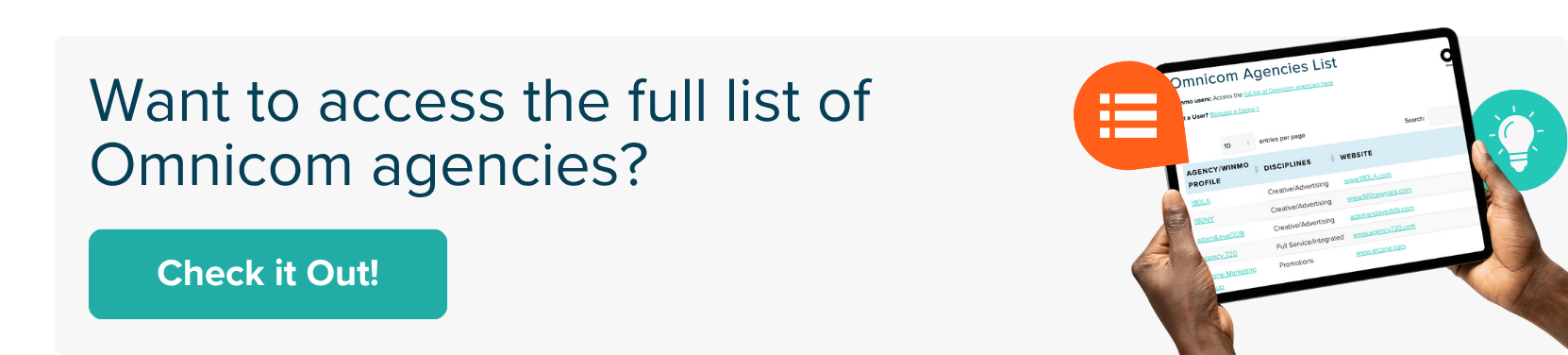
One of the biggest plays to date? The $13.3 billion all-stock acquisition of Interpublic Group (IPG), announced in late 2024, set to make Omnicom the largest advertising holding company in the world with combined revenues of $25.6 billion. The merger is projected to generate $750 million in annual savings through office consolidation, procurement efficiencies, and workforce optimization. Staff costs are expected to shrink by 10%, mostly in middle management and regional operations, while client-facing roles are being preserved.
But scale isn’t the only story of Omnicom.
Omnicom’s digital transformation efforts are in full swing, powered by investments in AI and advanced analytics to supercharge creative, media, and commerce solutions.
In Q1 2025, Omnicom Media Group posted 199 new business wins, outpacing its nearest competitor by more than 275%. The company reported a 3.4% increase in organic revenue to $3.7 billion, with net income reaching $287.7 million. Trailing twelve-month revenue topped $15.75 billion—a 5.84% increase year-over-year.
While the Omnicom name is as familiar a word for agencies as RFP, the history of the holding company is less discussed.
It all started in 1986, when Allen Rosenshine, Keith Reinhard, and John Bernbach merged BBDO Worldwide, Doyle Dane Bernbach, and Needham Harper Worldwide to create Omnicom Group. Since then, the company has built a legacy across four core disciplines:
In the late 1990s, Omnicom was a dominant force. At the 1996 Cannes International Advertising Festival, DDB Needham earned more awards than any other agency in the world. The next year, Fortune named Omnicom the most respected ad group, while The Wall Street Journal ranked it No. 1 in total return to shareholders—an accolade it held until 2006.
Culturally, the company has continued to evolve. Omniwomen, launched in 2014 to elevate female leadership, has grown into a global initiative with more than 10 branches spanning the US, UK, Canada, France, Germany, China, and the UAE.
Click below to check out the full list of agencies in the Omnicom Group:
Cannes Lions 2025: Winmo’s Essential Tour Guide
in Breaking News, Eventsby Sophia BeharCannes Lions 2025 will transform the French Riviera starting June 16th to welcome global creative leaders, visionary marketers, and A-list talent. While you’ve undoubtedly secured your delegate pass for the inspiring main stage talks and anxiously await the prestigious awards ceremonies, have you strategized your movements beyond the Palais des Festivals?
Winmo has curated an essential guide to help you navigate the vibrant landscape of Cannes Lions. We’re covering everything from the must-attend exclusive panels and insightful industry discussions happening throughout the day, to the chic happy hours and legendary after-parties that keep the Riviera buzzing well into the night. Grab your agenda and prepare to gain cutting-edge insights, network with global pioneers over chilled rosé, and immerse yourself in this unparalleled creative atmosphere!
Winmo helps you prepare in more ways than one! If you’re looking to connect with brands and agencies ahead of the event, Winmo is a one-stop shop to develop your prospect list and fuel your follow up.
Winmo’s Cannes Lions 2025 Tour Guide:
Sunday, 15 June
Monday, 16 June
Tuesday, 17 June
Wednesday, 18 June
Thursday, 19 June
Friday, 20 June
As you finalize your Cannes Lions 2025 itinerary, let this Winmo guide be your trusted companion for events beyond the main stage. While you’re finalizing your agenda, remember Winmo is here to power your pre-event outreach too. Here’s to a productive, inspiring, and memorable Cannes!
Micro vs. Macro vs. Mega Influencers: Which Should You Use?
in Breaking News, Influencer Marketing, Marketing, Sponsorshipby Sophia BeharInfluencer marketing continues to be a powerhouse for brands aiming to connect with audiences authentically. But with various types of creators available, navigating the landscape of influencer tiers can be daunting. Understanding the distinctions between micro, macro, and mega influencers is crucial for crafting a successful and cost effective strategy.
This guide will break down these categories, exploring their audience size, reach, engagement rates, and current examples found within Winmo to help you decide which is the best fit for your brand in 2025.
Download our latest industry report to discover more brands engaging influencers, tracked in Winmo!
Understanding Influencer Tiers
Influencers are generally categorized based on their follower count. This categorization, which Winmo identifies as “influencer tiers”, helps brands strategize whom to partner with based on campaign goals, budget, and target audience. Each tier offers unique advantages and potential drawbacks.
The Micro Influencer:
Balancing Reach and Engagement
Micro influencers can be a sweet spot for many brands, representing a balance of broad reach and genuine connection at a favorable price point.
Example of micro influencer within Winmo:
TechMeOut (Followers: 35.7k, as of May 2025) x Sony Electronics, Inc.
Micro influencers are best for:
Targeted marketing campaigns, brands looking to connect with engaged niche audiences with a decent reach, community building, and driving conversions.
The Macro Influencer:
Maximum Visibility, Broad Appeal
Macro influencers are well established creators, often internet celebrities or public figures, with a large and diverse following.
Example within Winmo:
Libby Christensen (Followers: 478k, as of May 2025) x Gymshark
Macro influencers are best for:
Large-scale brand awareness campaigns, major product launches targeting broad markets, and brands with substantial marketing budgets aiming for maximum exposure.
The Mega Influencer:
Unparalleled Reach and Trendsetting Power
At the very top of the influencer tiers sit the mega influencers. These are often celebrities, renowned public figures, or elite internet stars who have cultivated massive global audiences.
Example within Winmo:
Binging with Babish (Followers: 1.1M, as of May 2025) x HelloFresh
Mega influencers are best for:
Global brand launches, major campaigns aiming to shift public opinion or drive mass trends, luxury brands, and large corporations with substantial marketing budgets seeking maximum exposure and association with high profile personalities.
Unlock Data on Brand-Influencer Partnerships
For brands seeking granular data on which companies are partnering with specific influencer tiers and insights into influencer marketing spend, Winmo offers ‘Influencer Insights’. This feature can provide visibility into active brand-influencer campaigns across different influencer tiers, helping businesses understand market trends, competitor strategies, and identify potential partnership opportunities. While generic online research can provide static spending by tier, Winmo’s influencer insights aim to provide dynamic, up-to-date intelligence.
Want a preview of the influencer information Winmo tracks? Download our latest Industry Report today: